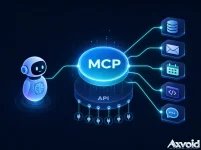
Yes, you still need APIs. MCP doesn't replace them. Almost every MCP server is a thin translation layer that calls a regular API underneath. What MCP changes is who the interface is designed for: AI agents instead of human developers.
If you've watched the hype and wondered whether your REST endpoints are about to become obsolete, this guide gives you the honest answer, with numbers.
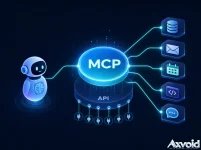
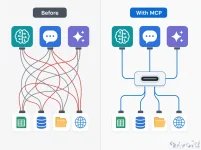
Think of it like USB-C. Before it, every device had its own charger. MCP gives every AI client one plug shape.
Under the hood, MCP uses a client-host-server architecture built on JSON-RPC. A host process, such as a desktop AI app, manages multiple clients, and each client talks to one server (MCP specification, architecture, 2026-07-28). Servers can run locally over stdio or remotely over Streamable HTTP.
Adoption figures vary by tracker. Aggregator sites report roughly 10,000 servers and around 97 million monthly SDK downloads by mid-2026. Treat those as directional, since they come from secondary sources rather than a single audited count.
That growth explains the question in your search bar. If everyone is building MCP servers, do APIs matter anymore?
The last row matters most. MCP defines how an agent finds and calls a capability. It doesn't replace the service that performs the work.
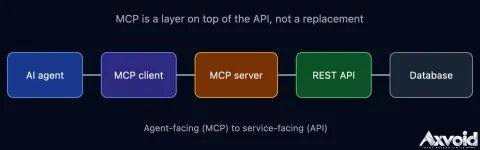
Here is the practical picture:
The useful question in the MCP vs API debate isn't "which one wins?" It's "who is the caller?" If a deterministic program is calling, an API wins. If a non-deterministic model is calling, MCP's self-describing tools earn their keep.
That's tokens you pay for on every request, before the agent does anything.
The same article reports a worked example where moving a workflow from direct tool calls to code execution cut usage from 150,000 tokens to 2,000, a 98.7% reduction. It also says deferred tool loading typically cuts definition overhead by more than 85%. The article attributes these figures to Anthropic's documentation and does not detail methodology, so treat them as illustrative, not universal.
Notice the irony. The fix for MCP's token bloat is often code that calls APIs directly. The API isn't going anywhere.
Traditional APIs have their own risks, but the caller is your code, which won't be talked into anything. A model can.
Practical safeguards:

A quick gut check: if you can write down the exact sequence of calls on a whiteboard before the task starts, you don't need MCP for it. Reserve MCP for work where the sequence depends on what the agent finds along the way.
The safest bet for builders: keep your API clean, well-documented, and well-secured. That investment pays off whether the caller is a developer, a script, or an agent. Then add an MCP server when an agent is genuinely the customer.
Next step: Audit one API you own. Ask, "Would an agent need to discover this on its own?" If yes, wrap it in MCP. If not, leave it alone.
If you've watched the hype and wondered whether your REST endpoints are about to become obsolete, this guide gives you the honest answer, with numbers.
Key Takeaways
- MCP wraps APIs; it doesn't replace them. Every MCP server still calls an API underneath.
- In 2026, a typical five-server MCP setup burns roughly 55,000 tokens on tool definitions alone (WorkOS, 2026).
- Use APIs for apps and pipelines. Use MCP when an AI agent must discover and choose tools itself.
What Is MCP, and Why Was It Created?
The Model Context Protocol is an open standard that lets AI applications connect to external tools and data through one common interface. Anthropic introduced it on November 25, 2024, according to Wikipedia's MCP entry (retrieved 2026-09-23). It solves the "N times M" problem: every AI app needed a custom integration for every service.Think of it like USB-C. Before it, every device had its own charger. MCP gives every AI client one plug shape.
Under the hood, MCP uses a client-host-server architecture built on JSON-RPC. A host process, such as a desktop AI app, manages multiple clients, and each client talks to one server (MCP specification, architecture, 2026-07-28). Servers can run locally over stdio or remotely over Streamable HTTP.
In November 2025, the MCP specification described the protocol as a client-host-server architecture on JSON-RPC, with stateful sessions between clients and servers. That statefulness is the key contrast with typical stateless REST calls.
How Big Did MCP Get?
MCP went from a single-vendor experiment to an industry standard in about a year. OpenAI adopted it in March 2025 and Google DeepMind announced support in April 2025 (Wikipedia, Model Context Protocol, retrieved 2026-09-23). In December 2025, Anthropic donated MCP to the Linux Foundation's Agentic AI Foundation.Adoption figures vary by tracker. Aggregator sites report roughly 10,000 servers and around 97 million monthly SDK downloads by mid-2026. Treat those as directional, since they come from secondary sources rather than a single audited count.
That growth explains the question in your search bar. If everyone is building MCP servers, do APIs matter anymore?
MCP vs API: What Is the Real Difference?
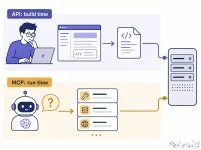
An API is a contract written for a developer, fixed at build time. MCP is a contract written for a model, discovered at runtime. Same underlying service, different audience. An API says "here are the endpoints; read the docs and code against them." MCP says "here's what I can do; ask me, and I'll tell you."| Dimension | Traditional API (REST/GraphQL) | MCP |
|---|---|---|
| Built for | Human developers | AI models and agents |
| Discovery | Read docs, write code | Agent asks the server what tools exist (tools/list) |
| Session model | Usually stateless | Stateful sessions |
| Description | OpenAPI, docs | Tool names, descriptions, JSON schemas |
| Who decides which call to make | Your code | The model |
| Auth and business logic | Lives in the API | Still lives in the API |
The last row matters most. MCP defines how an agent finds and calls a capability. It doesn't replace the service that performs the work.
Do We Still Need APIs After MCP?
Yes. Every MCP server needs something to call, and that something is almost always an API, database driver, or SDK. If APIs vanished, MCP servers would have nothing to wrap. The rate limits, auth scopes, and business rules you rely on all live in the API layer.Here is the practical picture:
- Your web or mobile app calls the API directly. Adding MCP in the middle adds latency and cost for no benefit.
- Your backend pipelines and cron jobs use the API. Their steps are known in advance.
- An AI agent that must decide what to do benefits from MCP, because it can discover tools and pick among them.
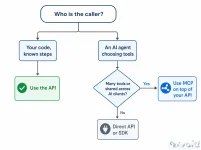
The useful question in the MCP vs API debate isn't "which one wins?" It's "who is the caller?" If a deterministic program is calling, an API wins. If a non-deterministic model is calling, MCP's self-describing tools earn their keep.
What Does MCP Cost You in Tokens?
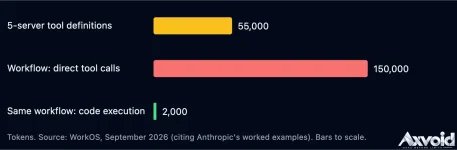
MCP's biggest hidden cost is context. Every connected tool's name, description, and schema gets loaded into the model's context window, whether or not the agent uses it. In 2026, WorkOS reported that a typical multi-server setup of GitHub, Slack, Sentry, Grafana, and Splunk consumes roughly 55,000 tokens in tool definitions alone (WorkOS, "What an MCP server costs you in tokens," September 2026).That's tokens you pay for on every request, before the agent does anything.
The same article reports a worked example where moving a workflow from direct tool calls to code execution cut usage from 150,000 tokens to 2,000, a 98.7% reduction. It also says deferred tool loading typically cuts definition overhead by more than 85%. The article attributes these figures to Anthropic's documentation and does not detail methodology, so treat them as illustrative, not universal.
Notice the irony. The fix for MCP's token bloat is often code that calls APIs directly. The API isn't going anywhere.
Is MCP Safe?
MCP adds a new attack surface. Because the model reads tool descriptions and outputs, malicious text can steer it. In April 2025, security researchers flagged prompt injection and "poisoned tools" that can exfiltrate data through other connected tools (Wikipedia, Model Context Protocol, retrieved 2026-09-23).Traditional APIs have their own risks, but the caller is your code, which won't be talked into anything. A model can.
Practical safeguards:
- Install only servers you trust, and review their tool descriptions.
- Grant least-privilege scopes to the underlying API credentials.
- Require human approval for destructive or financial actions.
- Keep sensitive systems behind a plain API with strict auth, not open agent access.
A quick gut check: if you can write down the exact sequence of calls on a whiteboard before the task starts, you don't need MCP for it. Reserve MCP for work where the sequence depends on what the agent finds along the way.
MCP vs API: When Should You Use Each, or Both?
Choose by caller and by how predictable the task is. If the steps are known and repeatable, call the API. If an agent must explore, choose tools, and adapt, expose those tools via MCP. Most real systems end up using both: the API as the foundation, MCP as the agent-facing adapter.| Situation | Best choice |
|---|---|
| Building a web/mobile app feature | API |
| Scheduled data sync or ETL | API |
| Chat assistant that works across many SaaS tools | MCP |
| One or two tools, latency-sensitive | API (or CLI/SDK) |
| Giving an agent access to your product | Both: API underneath, MCP on top |
| Very large tool catalog | MCP with tool search or code execution |
What Comes Next?
Expect MCP and APIs to converge rather than compete. Tool search, deferred loading, and code execution all reduce MCP's overhead by leaning on plain API calls. Meanwhile, API teams increasingly publish MCP servers alongside their OpenAPI specs.The safest bet for builders: keep your API clean, well-documented, and well-secured. That investment pays off whether the caller is a developer, a script, or an agent. Then add an MCP server when an agent is genuinely the customer.
Next step: Audit one API you own. Ask, "Would an agent need to discover this on its own?" If yes, wrap it in MCP. If not, leave it alone.
Frequently Asked Questions
Is MCP replacing REST APIs?
No. MCP servers typically call REST APIs, databases, or SDKs to do the real work. MCP standardizes how AI agents discover and invoke those capabilities. Anthropic introduced it in November 2024, and it now sits on top of existing APIs rather than replacing them.Is MCP just an API wrapper?
Mostly, in practice, but with extras. MCP adds standardized discovery (the agent asks what tools exist), typed schemas, and stateful sessions over JSON-RPC. The business logic still lives in the wrapped API.Does MCP cost more than calling an API directly?
Often, yes. Tool definitions are loaded into context on every request. In 2026, WorkOS put a five-server setup at roughly 55,000 tokens of definitions alone. Deferred loading can cut that overhead by more than 85%, according to the same source.Can I build an AI agent without MCP?
Yes. You can give a model function-calling definitions and call APIs yourself. MCP's value is reuse: one server works across many AI clients. For a single app with a few tools, direct API integration is often simpler and cheaper.Who governs MCP now?
In December 2025, Anthropic donated MCP to the Agentic AI Foundation, a Linux Foundation-directed fund co-founded by Anthropic, Block, and OpenAI. Neutral governance is a big reason competing vendors adopted it.Sources
- Model Context Protocol, Specification: Architecture (2026-07-28), retrieved 2026-09-23: https://modelcontextprotocol.io/specification/2026-07-28/architecture/index
- WorkOS, What an MCP server costs you in tokens, September 18, 2026, retrieved 2026-09-23: https://workos.com/blog/mcp-server-token-cost
- Wikipedia, Model Context Protocol, retrieved 2026-09-23: https://en.wikipedia.org/wiki/Model_Context_Protocol